
The Science of Seeing Through Walls with Thermal Imaging to Find Leaks
Water damage often hides behind walls, under floors, or in ceiling cavities long before you see visible signs. By the time drywall shows stains or floors feel soft, mold growth and structural weakening may already be underway. Thermal imaging technology lets certified restoration professionals in Dallas detect these hidden moisture problems without cutting into walls or tearing up floors. This non-invasive approach uses infrared cameras to identify temperature differences caused by evaporative cooling from water, allowing technicians to pinpoint leaks behind drywall, under concrete slabs, and above ceilings with remarkable accuracy. Emergency Water Removal Services for Dallas Homeowners Available Right Now.
The science behind thermal imaging for leak detection relies on the principle that moisture changes the thermal properties of building materials. When water evaporates from damp surfaces, it creates a cooling effect that shows up as a distinct thermal anomaly on an infrared camera. These temperature differentials, often as small as 2-3 degrees Fahrenheit, reveal the exact location of hidden leaks. Professional-grade thermal cameras used by Dallas restoration experts can detect moisture behind materials up to several inches thick, making them invaluable for finding slab leaks, roof leaks, and plumbing failures without destructive testing. Trustworthy Water Damage Restoration Services in Preston Hollow.
Unlike consumer-grade thermal attachments for smartphones that cost around $500, professional thermal imaging equipment used in Dallas water damage restoration costs $5,000-$15,000 and provides thermal sensitivity as low as 50 millikelvin. This precision matters when you’re dealing with Category 1 water from clean sources versus Category 3 black water from sewage backups. The technology doesn’t just show where water is present—it helps restoration professionals assess the extent of damage, determine the water category, and develop a targeted mitigation plan that follows IICRC S500 standards for professional water damage restoration. Quick Water Damage Cleanup for Uptown Dallas Condos and Apartments.
How Thermal Imaging Works in Dallas Homes
Thermal imaging cameras detect infrared radiation emitted by objects based on their temperature. In water damage scenarios, the camera displays a heat map where cooler areas appear in different colors than warmer surrounding materials. When moisture is present, it creates evaporative cooling that shows up as dark blue or purple spots on the thermal display, while dry areas appear as yellow or red. This temperature differential allows technicians to see through walls and identify moisture patterns that would otherwise remain hidden until extensive damage occurs.. Read more about Why Moisture Is Building Up in Your Lewisville Attic (And How to Fix It).
The effectiveness of thermal imaging depends on several factors unique to Dallas’s climate and building practices. North Texas homes commonly feature slab-on-grade foundations built on expansive clay soil, which creates specific leak patterns. When plumbing pipes under concrete slabs develop pinhole leaks, the escaping water saturates the surrounding soil and creates temperature anomalies that thermal cameras can detect from above. The technology works best when there’s a temperature differential between the interior and exterior, making it particularly effective during Dallas’s seasonal temperature swings from summer heat to winter cold. What to Do When a Pipe Bursts in Your North Dallas Kitchen.
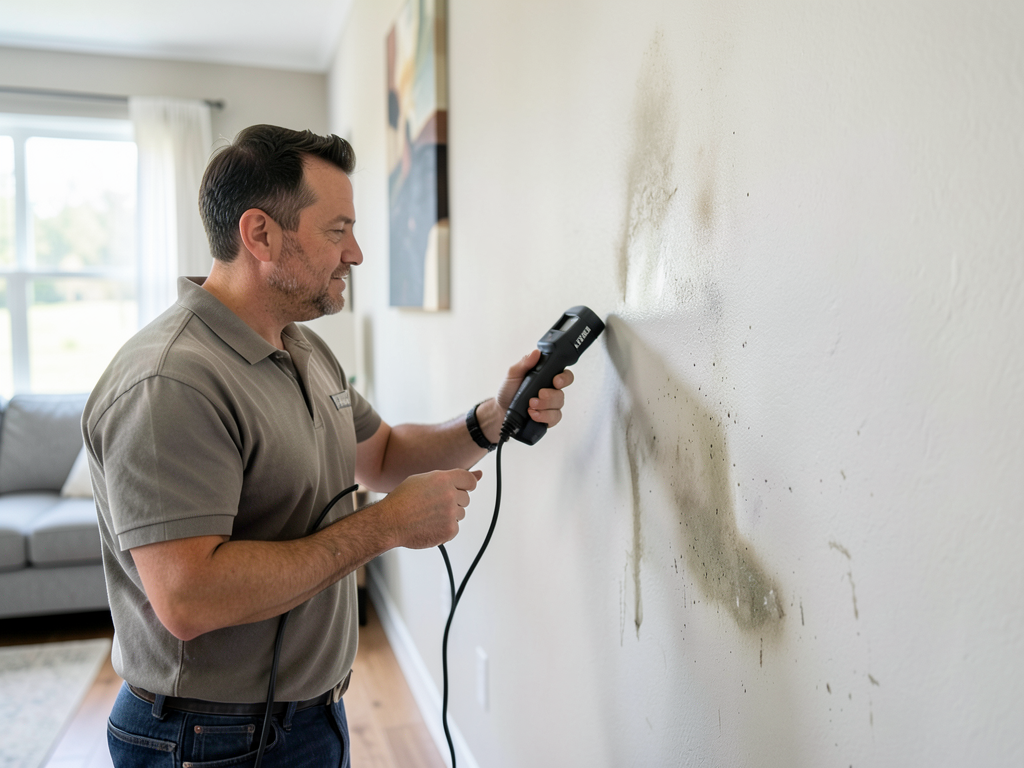
Professional thermal imaging goes beyond simple temperature detection. Certified technicians use the technology in conjunction with moisture meters to verify findings and assess the extent of water migration. While thermal cameras can show where moisture might be present, they cannot measure the actual moisture content. This is why the verification process is critical—technicians use penetrating and non-penetrating moisture meters to confirm thermal anomalies and determine whether materials require drying or replacement. This combination of thermal imaging and moisture testing provides the comprehensive assessment needed for insurance documentation and effective restoration planning.. Read more about Why New Construction in The Colony Might Still Face Water Intrusion Issues.
Benefits of Non-Invasive Leak Detection in Dallas
The primary advantage of thermal imaging for leak detection is its non-destructive nature. Traditional leak detection often requires cutting holes in walls, removing sections of flooring, or breaking through concrete slabs to visually inspect for damage. This invasive approach not only creates additional repair costs but also risks spreading mold spores and creating dust that can affect indoor air quality. Thermal imaging eliminates these concerns by allowing technicians to scan entire rooms in minutes and identify problem areas without any demolition. EPA Mold Information.
Cost savings represent another significant benefit. When a Dallas homeowner suspects a leak, the traditional approach might involve multiple exploratory cuts and inspections, each adding to the total restoration cost. Thermal imaging can often identify the exact location of a leak in a single scan, allowing for targeted repairs that minimize both material waste and labor hours. For example, finding a slab leak under a hardwood floor using thermal imaging might require removing only a small section of flooring rather than tearing up the entire room to locate the problem. Saving Your Hardwood Floors After Water Damage in Dallas.
Early detection through thermal imaging prevents the cascade of damage that occurs when leaks go unnoticed. In Dallas’s humid climate, water that remains undetected for even 48-72 hours can lead to mold growth, wood rot, and structural weakening. Thermal imaging allows for immediate identification of moisture problems, enabling rapid response that can save thousands of dollars in secondary damage. The technology is particularly valuable for detecting slow leaks from AC condensate lines, which are common in Dallas homes and can cause extensive damage before producing visible signs.. Read more about Signs Your Chimney Is Letting Water Into Your Highland Park Living Room.
Common Water Leak Issues in Dallas Homes
Dallas homes face unique water damage challenges due to the region’s expansive clay soil and extreme temperature variations. Slab leaks represent one of the most common issues, affecting homes throughout neighborhoods like Preston Hollow, University Park, and Lakewood. The clay soil in North Texas expands when wet and contracts when dry, creating pressure on underground plumbing that can cause pipes to crack or separate at joints. These slab leaks often produce subtle signs like warm spots on floors or slightly elevated water bills before causing major damage.
AC condensate line backups are another prevalent problem in Dallas homes, particularly during the hot summer months when air conditioning systems work overtime. When condensate lines become clogged with algae or debris, water backs up into the drain pan and can overflow into walls and ceilings. Thermal imaging excels at detecting these hidden moisture problems, showing temperature patterns that indicate water accumulation behind drywall or above ceilings. The technology can identify the extent of water migration, helping technicians determine whether simple drying will suffice or if more extensive repairs are needed.. Read more about The Hidden Risks of Secondary Water Damage You Might Not Notice at First.
Roof leaks from Dallas’s severe weather events also benefit from thermal imaging detection. The region experiences frequent thunderstorms, hail, and occasional winter ice that can damage roofing materials. When water penetrates through compromised shingles or flashing, it travels along rafters and sheathing before appearing as stains on ceilings. Thermal imaging can track this water migration path, showing technicians exactly where to make repairs rather than replacing large sections of roofing based on guesswork. This targeted approach saves both time and money while ensuring the actual source of the leak is properly addressed.
Our Process: From Infrared Scan to Restoration
The thermal imaging leak detection process begins with a comprehensive assessment of the affected area. When you call (972) 886-5955 for emergency service, our certified technicians arrive with professional-grade FLIR or Fluke thermal cameras and moisture meters. We start by scanning the suspected area to identify thermal anomalies that might indicate moisture presence. This initial scan typically takes 15-30 minutes for an average room and provides immediate visual feedback on areas requiring further investigation.
Once thermal anomalies are identified, we verify findings using moisture meters to measure actual moisture content in building materials. This two-step verification process is essential because thermal cameras show temperature differences but cannot determine whether those differences are caused by moisture or other factors like missing insulation or air leaks. Our technicians document all findings with both thermal images and moisture readings, creating a comprehensive report that serves as the foundation for the restoration plan and insurance documentation.
The restoration process following thermal imaging detection follows IICRC S500 standards for water damage mitigation. Category 1 water from clean sources like supply line breaks requires different handling than Category 3 black water from sewage backups. Our thermal imaging reports help determine the water category by showing the extent of contamination spread. We then develop a targeted mitigation plan that may include water extraction, structural drying with commercial-grade dehumidifiers and air movers, antimicrobial treatment to prevent mold growth, and necessary repairs. Throughout the process, we maintain detailed documentation that helps with insurance claims and ensures all work meets Dallas building code requirements.
Why Choose a Certified Dallas Restoration Expert
Thermal imaging for water leak detection requires specialized training and certification to interpret results accurately. The IICRC offers certification in water damage restoration that includes thermal imaging training, ensuring technicians understand both the technology and the science of moisture behavior in building materials. In Dallas, where homes range from historic structures in Oak Cliff to modern builds in Frisco, this expertise matters. Different construction methods and materials require different approaches to thermal imaging and moisture assessment.
Local experience provides another crucial advantage. Dallas restoration experts understand the specific challenges posed by North Texas’s expansive clay soil, which can cause foundation movement and plumbing stress. They know how Dallas’s extreme temperature variations affect thermal imaging results and can distinguish between normal seasonal temperature patterns and moisture-related anomalies. This local knowledge, combined with professional certification, ensures accurate diagnosis and effective restoration planning that addresses the root cause rather than just treating symptoms.
Response time is critical in water damage scenarios, and Dallas-based restoration companies can typically arrive within 60 minutes of your call. This rapid response is essential because water continues to migrate and cause damage every minute it remains untreated. Our team at Peak Water Damage Restoration Dallas maintains 24/7 emergency service with fully equipped trucks ready to deploy at any hour. When you call (972) 886-5955, you’re connecting with local experts who understand Dallas’s specific building codes, insurance requirements, and environmental conditions.
Comparing Thermal Imaging to Traditional Detection Methods
Traditional leak detection methods rely on visual inspection, acoustic listening devices, or pressure testing, each with significant limitations. Visual inspection only identifies damage after it becomes visible, often when repair costs have already escalated. Acoustic devices can detect the sound of water movement but cannot determine the extent of moisture spread or identify hidden mold growth. Pressure testing can confirm the presence of a leak but requires system isolation and may not pinpoint the exact location.
Thermal imaging overcomes these limitations by providing immediate visual feedback on moisture location and extent without any demolition. A comparison table illustrates the key differences:
| Detection Method | Accuracy | Non-Destructive | Time Required | Cost Range |
|---|---|---|---|---|
| Thermal Imaging | High (90%+) | Yes | 15-30 minutes per room | $150-300 per scan |
| Acoustic Detection | Moderate (60-80%) | Yes | 30-60 minutes | $200-400 per area |
| Visual Inspection | Low (30-50%) | No | Hours to days | $300-800 plus repairs |
| Pressure Testing | High for presence only | No | 2-4 hours | $400-1,000 |
The speed advantage of thermal imaging becomes particularly apparent in emergency situations. When water is actively spreading through walls or under floors, every minute counts. Thermal cameras can scan an entire room in minutes and identify problem areas immediately, while traditional methods might require hours of testing and still miss hidden moisture. This speed translates directly to cost savings by minimizing secondary damage and reducing the overall restoration timeline.
Documentation quality represents another critical difference. Thermal imaging provides visual evidence that insurance adjusters can immediately understand and accept. The images show exactly where moisture is present and the extent of affected areas, making it easier to justify restoration costs. Traditional methods often require more explanation and may face greater scrutiny from insurance companies, potentially leading to coverage disputes or reduced claim approvals.
Frequently Asked Questions
How accurate is thermal imaging for finding water leaks?
Professional thermal imaging is highly accurate, typically identifying moisture problems with 90% or greater accuracy when performed by certified technicians. The technology detects temperature differences as small as 2-3 degrees Fahrenheit, which is sufficient to identify evaporative cooling from moisture. However, thermal cameras cannot measure actual moisture content, so verification with moisture meters is essential for accurate assessment.
Can I use my smartphone’s thermal camera attachment instead of hiring a professional?
Smartphone thermal attachments cost around $500 but lack the thermal sensitivity and resolution of professional equipment. Professional thermal cameras used in Dallas restoration work have thermal sensitivity as low as 50 millikelvin and can detect moisture through several inches of building material. Consumer-grade devices may miss subtle temperature differences and cannot verify findings with moisture meters, potentially leading to missed problems or false positives.
How long does a thermal imaging leak detection scan take?
A typical thermal imaging scan of a single room takes 15-30 minutes. The technician will scan walls, ceilings, and floors systematically to identify thermal anomalies. If multiple rooms or an entire house needs scanning, the process may take 2-4 hours depending on the property size. The quick scanning time makes thermal imaging ideal for emergency situations where rapid assessment is critical.
Will thermal imaging damage my walls or floors?
No, thermal imaging is completely non-destructive. The infrared camera only detects heat radiation emitted by objects—it doesn’t emit any radiation or require physical contact with surfaces. This means technicians can scan through walls, floors, and ceilings without creating any damage, making it ideal for historic homes or properties with expensive finishes.
What should I do if thermal imaging finds a leak?
If thermal imaging confirms a leak, the next step is to determine the water category (clean, grey, or black water) and develop a restoration plan following IICRC S500 standards. For clean water leaks, immediate extraction and drying may suffice. For contaminated water, antimicrobial treatment and more extensive restoration may be necessary. Contact a certified restoration company immediately to prevent further damage.
How much does professional thermal imaging leak detection cost in Dallas?
Professional thermal imaging leak detection in Dallas typically costs $150-300 per scan, with most residential inspections ranging from $300-600 depending on the number of rooms and complexity of the property. While this may seem expensive compared to consumer devices, the accuracy, verification process, and professional documentation provided justify the cost, especially when dealing with potential insurance claims.. Read more about Dealing with a Flooded Luxury Media Room or Home Theater in Bluffview.
Can thermal imaging detect mold growth behind walls?
Thermal imaging can identify areas of potential moisture that might support mold growth, but it cannot directly detect mold itself. The technology shows temperature differences caused by evaporative cooling from moisture, which often correlates with mold-friendly conditions. For confirmed mold detection, additional testing with moisture meters and possibly air quality sampling is necessary.
Is thermal imaging useful for finding slab leaks specifically?
Yes, thermal imaging is particularly effective for detecting slab leaks in Dallas homes. When water escapes from pipes under concrete slabs, it creates temperature anomalies that thermal cameras can detect from above. The technology can show the extent of moisture spread under the slab and help technicians determine whether the leak is from a hot or cold water line based on temperature patterns.
Do I need thermal imaging if I already see visible water damage?
Even when visible water damage is present, thermal imaging can reveal the full extent of moisture migration that isn’t visible to the naked eye. Water often travels along building materials in ways that aren’t apparent from surface stains. Thermal imaging ensures all affected areas are identified and properly addressed, preventing missed moisture that could lead to future mold growth or structural issues.
How does thermal imaging help with insurance claims?
Thermal imaging provides clear visual documentation that insurance adjusters can immediately understand. The images show exactly where moisture is present and the extent of affected areas, making it easier to justify restoration costs. This documentation often leads to faster claim approvals and can help prevent disputes about the extent of damage or necessary repairs.
Take Action Before Hidden Water Damage Worsens
Water damage doesn’t wait for convenient times to strike. Whether you’re dealing with a suspected slab leak, mysterious ceiling stains, or the aftermath of a burst pipe, thermal imaging provides the fast, accurate diagnosis needed to protect your Dallas home. The technology’s ability to see through walls and identify moisture problems without demolition makes it the ideal first step in any water damage investigation.
At Peak Water Damage Restoration Dallas, we combine professional-grade thermal imaging equipment with IICRC-certified expertise to deliver accurate assessments and effective restoration solutions. Our technicians understand Dallas’s unique building challenges, from expansive clay soil to extreme temperature variations, ensuring your home receives the specialized care it needs. Don’t let hidden water damage compromise your property’s value or your family’s health.
Call (972) 886-5955 today to schedule your thermal imaging leak detection scan. Our 24/7 emergency service means we’re ready to respond whenever water damage strikes, providing the rapid assessment and professional restoration your Dallas home deserves. The sooner we identify the problem, the more we can save you in repair costs and prevent secondary damage like mold growth.
Protect your investment with the science of seeing through walls. Thermal imaging isn’t just about finding leaks—it’s about preserving your home’s structural integrity, protecting your family’s health, and ensuring your property maintains its value for years to come. Let our Dallas restoration experts put this powerful technology to work for you. For more information, visit FEMA Flood Insurance Information.
You may also find this helpful. Why Your Upstairs Shower Pan Leak Is Ruining Your Victory Park Condo Ceiling.
{
“@context”: “https://schema.org”,
“@type”: “BlogPosting”,
“headline”: “The Science of Seeing Through Walls with Thermal Imaging to Find Leaks”,
“description”: “Discover how thermal imaging detects hidden water leaks in Dallas homes without demolition. Learn the science behind infrared thermography and how certified experts use it to protect your property.”,
“wordCount”: 2883,
“datePublished”: “2026-04-04T10:02:00.000Z”,
“dateModified”: “2026-04-04T10:02:00.000Z”,
“inLanguage”: “en-US”,
“mainEntityOfPage”: {
“@type”: “WebPage”,
“@id”: “https://peakwaterdamagerestorationdallas.com”
},
“publisher”: {
“@type”: “LocalBusiness”,
“name”: “Peak Water Damage Restoration Dallas”,
“url”: “https://peakwaterdamagerestorationdallas.com”
},
“author”: {
“@type”: “Organization”,
“name”: “Peak Water Damage Restoration Dallas”,
“url”: “https://peakwaterdamagerestorationdallas.com”
},
“image”: {
“@type”: “ImageObject”,
“url”: “https://peakwaterdamagerestorationdallas.com/wp-content/uploads/2026/03/the-science-of-seeing-through-walls-with-thermal-i-1.png”
}
}
{
“@context”: “https://schema.org”,
“@type”: “LocalBusiness”,
“name”: “Peak Water Damage Restoration Dallas”,
“url”: “https://peakwaterdamagerestorationdallas.com”,
“address”: {
“@type”: “PostalAddress”,
“addressLocality”: “Dallas”
},
“areaServed”: {
“@type”: “City”,
“name”: “Dallas”
}
}
{
“@context”: “https://schema.org”,
“@type”: “FAQPage”,
“mainEntity”: [
{
“@type”: “Question”,
“name”: “How accurate is thermal imaging for finding water leaks?”,
“acceptedAnswer”: {
“@type”: “Answer”,
“text”: “Professional thermal imaging is highly accurate, typically identifying moisture problems with 90% or greater accuracy when performed by certified technicians. The technology detects temperature differences as small as 2-3 degrees Fahrenheit, which is sufficient to identify evaporative cooling from moisture. However, thermal cameras cannot measure actual moisture content, so verification with moisture meters is essential for accurate assessment.”
}
},
{
“@type”: “Question”,
“name”: “Can I use my smartphone’s thermal camera attachment instead of hiring a professional?”,
“acceptedAnswer”: {
“@type”: “Answer”,
“text”: “Smartphone thermal attachments cost around $500 but lack the thermal sensitivity and resolution of professional equipment. Professional thermal cameras used in Dallas restoration work have thermal sensitivity as low as 50 millikelvin and can detect moisture through several inches of building material. Consumer-grade devices may miss subtle temperature differences and cannot verify findings with moisture meters, potentially leading to missed problems or false positives.”
}
},
{
“@type”: “Question”,
“name”: “How long does a thermal imaging leak detection scan take?”,
“acceptedAnswer”: {
“@type”: “Answer”,
“text”: “A typical thermal imaging scan of a single room takes 15-30 minutes. The technician will scan walls, ceilings, and floors systematically to identify thermal anomalies. If multiple rooms or an entire house needs scanning, the process may take 2-4 hours depending on the property size. The quick scanning time makes thermal imaging ideal for emergency situations where rapid assessment is critical.”
}
},
{
“@type”: “Question”,
“name”: “Will thermal imaging damage my walls or floors?”,
“acceptedAnswer”: {
“@type”: “Answer”,
“text”: “No, thermal imaging is completely non-destructive. The infrared camera only detects heat radiation emitted by objects—it doesn’t emit any radiation or require physical contact with surfaces. This means technicians can scan through walls, floors, and ceilings without creating any damage, making it ideal for historic homes or properties with expensive finishes.”
}
},
{
“@type”: “Question”,
“name”: “What should I do if thermal imaging finds a leak?”,
“acceptedAnswer”: {
“@type”: “Answer”,
“text”: “If thermal imaging confirms a leak, the next step is to determine the water category (clean, grey, or black water) and develop a restoration plan following IICRC S500 standards. For clean water leaks, immediate extraction and drying may suffice. For contaminated water, antimicrobial treatment and more extensive restoration may be necessary. Contact a certified restoration company immediately to prevent further damage.”
}
},
{
“@type”: “Question”,
“name”: “How much does professional thermal imaging leak detection cost in Dallas?”,
“acceptedAnswer”: {
“@type”: “Answer”,
“text”: “Professional thermal imaging leak detection in Dallas typically costs $150-300 per scan, with most residential inspections ranging from $300-600 depending on the number of rooms and complexity of the property. While this may seem expensive compared to consumer devices, the accuracy, verification process, and professional documentation provided justify the cost, especially when dealing with potential insurance claims.”
}
},
{
“@type”: “Question”,
“name”: “Can thermal imaging detect mold growth behind walls?”,
“acceptedAnswer”: {
“@type”: “Answer”,
“text”: “Thermal imaging can identify areas of potential moisture that might support mold growth, but it cannot directly detect mold itself. The technology shows temperature differences caused by evaporative cooling from moisture, which often correlates with mold-friendly conditions. For confirmed mold detection, additional testing with moisture meters and possibly air quality sampling is necessary.”
}
},
{
“@type”: “Question”,
“name”: “Is thermal imaging useful for finding slab leaks specifically?”,
“acceptedAnswer”: {
“@type”: “Answer”,
“text”: “Yes, thermal imaging is particularly effective for detecting slab leaks in Dallas homes. When water escapes from pipes under concrete slabs, it creates temperature anomalies that thermal cameras can detect from above. The technology can show the extent of moisture spread under the slab and help technicians determine whether the leak is from a hot or cold water line based on temperature patterns.”
}
},
{
“@type”: “Question”,
“name”: “Do I need thermal imaging if I already see visible water damage?”,
“acceptedAnswer”: {
“@type”: “Answer”,
“text”: “Even when visible water damage is present, thermal imaging can reveal the full extent of moisture migration that isn’t visible to the naked eye. Water often travels along building materials in ways that aren’t apparent from surface stains. Thermal imaging ensures all affected areas are identified and properly addressed, preventing missed moisture that could lead to future mold growth or structural issues.”
}
},
{
“@type”: “Question”,
“name”: “How does thermal imaging help with insurance claims?”,
“acceptedAnswer”: {
“@type”: “Answer”,
“text”: “Thermal imaging provides clear visual documentation that insurance adjusters can immediately understand. The images show exactly where moisture is present and the extent of affected areas, making it easier to justify restoration costs. This documentation often leads to faster claim approvals and can help prevent disputes about the extent of damage or necessary repairs.”
}
}
]
}
{
“@context”: “https://schema.org”,
“@type”: “BreadcrumbList”,
“itemListElement”: [
{
“@type”: “ListItem”,
“position”: 1,
“name”: “Home”,
“item”: “https://peakwaterdamagerestorationdallas.com”
},
{
“@type”: “ListItem”,
“position”: 2,
“name”: “Blog”,
“item”: “https://peakwaterdamagerestorationdallas.com/blog”
},
{
“@type”: “ListItem”,
“position”: 3,
“name”: “The Science of Seeing Through Walls with Thermal Imaging to Find Leaks”
}
]
}
{
“@context”: “https://schema.org”,
“@type”: “Service”,
“serviceType”: “Water Damage Restoration”,
“provider”: {
“@type”: “LocalBusiness”,
“name”: “Peak Water Damage Restoration Dallas”,
“url”: “https://peakwaterdamagerestorationdallas.com”
},
“areaServed”: {
“@type”: “City”,
“name”: “Dallas”
},
“description”: “Discover how thermal imaging detects hidden water leaks in Dallas homes without demolition. Learn the science behind infrared thermography and how certified experts use it to protect your property.”
}